

Hamilton Astronomical Society -
Rocket Challenge 2026 - 31st January
Build a water rocket to fly the furthest. This year the competition is open to all Hamilton Astronomical Society members (not just the Young Astronomers).
Day: Saturday 31st January
Time: Rockets Start to fly at 2pm
Where: Location TBC
Getting Started
The most basic water rocket you can make is a soft drink bottle with fins glued on. The simplest designs are still very competitive. Adding a nose cone might even make it fly further (or not).
Honestly we’ll launch almost anything that you’ve attempted to add fins to (as long as it has a standard thread on the bottle, see rules for further info), so don’t stress if you’re reading this 15 minutes beforehand because you forgot.
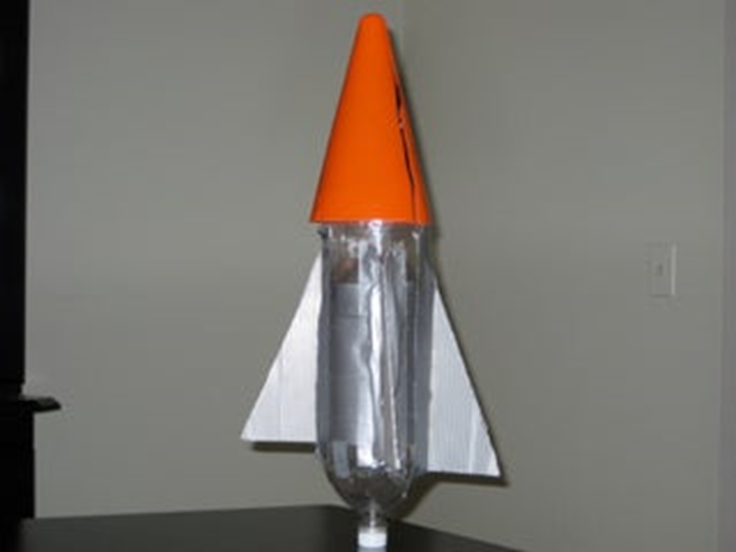
Water rocket with taped-on fins and nose cone. Stolen from Instructables.com.
That’s about it really.
We also encourage everyone to decorate their rockets, there’s a prize for that too for the Young Astronomers.
Launch Day
Day: Saturday 31st January
Time: Rockets Start to fly at 2pm
Location:TBC
Note this date and time is weather dependent.
Rules
DESIGN
We’re pretty relaxed about rocket design. As long as it doesn’t explode during pressurization or break apart during flight, then you can design whatever you like. If this does happen, your rocket probably won’t make it very far anyway and shrapnel doesn’t count for distance.
The minimum requirement is having fins to keep it stable in flight.
We also ask that you don’t add anything heavy or super sharp (like metal parts) to your rocket for safety. If you can’t release the rocket from 1 metre above the ground onto your hand then we will deem it unsafe and won’t launch it.
No pyrotechnics, water additives (e.g., soap), or mischief.
BOTTLE REQUIREMENTS
Only one really - all rockets will need to have the standard thread on most carbonated beverage bottles (28mm). This is super important as we will not be able to accommodate any water bottle rocket that does not have this thread.
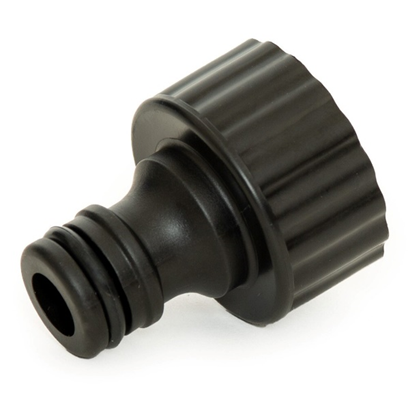
The standard nozzle we will provide for each rocket.
Basically, if it fits standard Coca-Cola lids, then it should work – note this isn’t a standard hose thread width is much narrower than a soft drink bottle.
H & S
It is important that all participants follow the instructions of those running the launching.
PLACING
The winning rocket is the furthest down-range at the end of the competition. That means the furthest along the line that the launcher is pointing.
For example, a rocket that lands 50m forward and 1m to the left is still further than a rocket that landed 49m forward and 30m left. So it’s in your best interest to fly straight.
Design Tips
Congratulations for making it this far through the document, here are some tips to help you win.
As stated in the rules, fins are required for stability in flight. Un-finned bottles have a tendency to turn around and fly straight back at the launcher with demonic velocity (ask us how we know). Here’s a video of a simple test you can do to check they’re big enough.
Additionally, adding weight to the nose of your rocket helps in two ways:
It gives it enough momentum to keep flying. Imagine how far you can throw an empty plastic bottle, that’s how far an unweighted rocket goes after expelling all the water.
It moves the center of mass forward so that the fins don’t have to be as large to keep everything stable.
A very common method to add weight is taping a tennis ball onto the top. They’re a good weight, won’t break on landing, and make the rockets pointier.
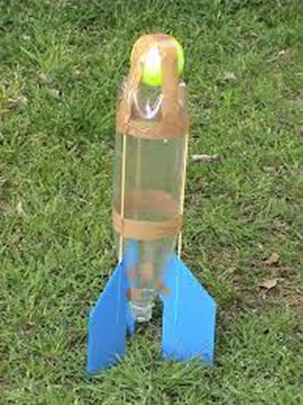
Please use 1.25L bottles.
You can make a couple of bottle rockets to fly, and we should get some time to tweak designs
depending how many people bring along rockets.
